
What is BREEAM Certification? Sustainable Office Design in London

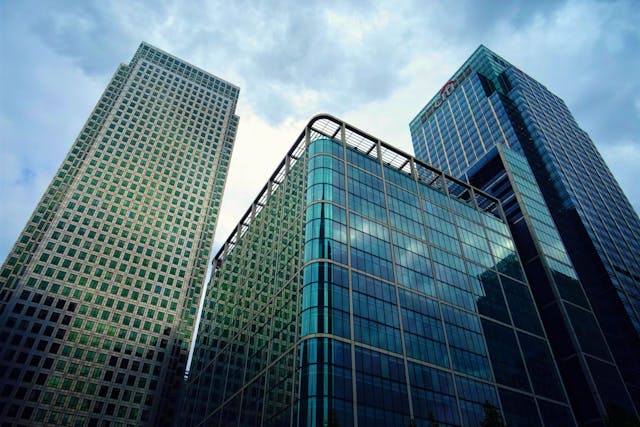
A low-angle daytime view up at three towering skyscrapers in the London business district. The buildings are modern with glass facades shining with a turquoise hue under a cloudy sky. Modern London office buildings are leading the way when it comes to sustainable office design, many attaining Excellent or Outstanding BREEAM ratings. Image at LondonOfficeSpace.com.

In the London commercial real estate market, sustainable office design is no longer a trend, but a defining factor. With growing pressure from regulatory requirements, corporate ESG commitments, and changing tenant expectations, demand for green office spaces has never been higher. As a result, businesses and landlords are rethinking their approach to office space.

One of the key ways they’re doing this is through BREEAM certification, which stands for Building Research Establishment Environmental Assessment Method. Originating in the UK, BREEAM is a guideline for sustainable building design that is now accepted as a gold standard the world over. But what exactly does BREEAM involve, and why does it matter for landlords and occupiers in the London office market? Let’s take a look at how London offices are going green through this accredited standard.

The Green Shift in London’s Office Market

The demand for sustainable office spaces in London has surged in recent years, driven by stronger enforcement of corporate responsibility schemes and stricter government regulations, such as Net Zero Commitments, ESG (Environmental, Social, and Governance) Requirements, and Minimum Energy Efficiency Standards (MEES).

This has caused a shift in how commercial real estate is valued. For example, Grade A offices are now exclusively comprised of those that meet green criteria. As a result, landlords are prioritising green features that improve energy efficiency, reduce waste, and create healthier working environments.

Continue reading “What is BREEAM Certification? Sustainable Office Design in London”
The Benefits of Having Plants in the Office

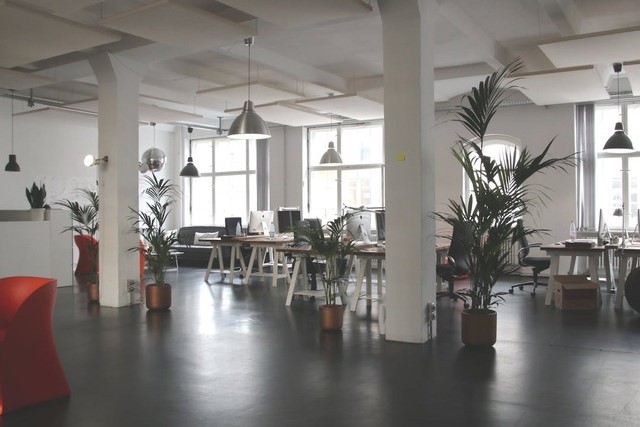
A daytime view across the inside of a modern, open-plan office space with a polished concrete floor, chrome pendant lights hanging from the ceiling and floor-to-ceiling windows letting in muted sunlight, probably from an overcast sky. Indoor plants are arranged artfully in round bronze-coloured pots next to the rectangular white columns that rise to the ceiling in the middle of the workspace, and workstations are arranged next to the windows. Image at LondonOfficeSpace.com.

In recent years, there has been a significant shift towards prioritising well-being in the workplace. As time goes by, businesses have a better understanding of how the environment impacts employee health and productivity. In a 2021 survey, nearly 70% of executives rated well-being as a top priority for their organisation.

As a result, many companies are increasingly focusing on their office workers’ quality of life, creating office spaces that support both physical and mental well-being. One of the most popular and effective ways to increase productivity and improve different measures of workplace satisfaction is by incorporating plants in the office, as we will see in this article.

The Physical Benefits of Indoor Office Plants

Plants absorb carbon dioxide and release oxygen, creating an oxygen-rich environment and improved air quality. Previously conducted laboratory studies by NASA have shown that plants can filter out volatile organic compounds and other harmful toxins present in plastics, inks, cleaning products, and some types of insulation.

Indoor plants can also regulate humidity levels. According to the HSE, low humidity is one of the causes behind sick building syndrome. Offices often suffer from dry air due to temperature control, heating and air conditioning systems and layouts that interfere with airflow. Plants draw water from the roots to their leaves, releasing moisture into the air and helping maintain optimal humidity levels. 

Continue reading “The Benefits of Having Plants in the Office”