
City in the East – London Plan

In October 2015, the mayor of London unveiled his office’s development plan for several neighbourhoods in East London and to the south of the River Thames. This initiative is part of the London Plan, an ambitious project that was initially presented to the general public in 2004. The main objective behind the new City in the East plan is to promote the socio-economic development of designated Opportunity Areas within the British capital.

Below is a detailed description of the plan and the benefits that it will bring to local residents once completed.

City in the East: An Overview

The City in the East Plan is a collaborative project that will bring together the Greater London Authority, local borough councils, Transport for London, and a number of stakeholders from both the public and private sectors. The plan aims to consolidate and build on previous urban development projects, such as Thames Gateway.

City in the East will focus on the creation of employment and on the development of quality housing by capitalising on the large amounts of brownfield land available in this part of the city, and by transforming it into mixed-use developments. Overall, it is expected that the implementation of this plan will benefit approximately 600,000 Londoners and will result in the creation of 280,000 jobs and 200,000 homes. At the same time, the City in the East plan will help prepare the UK’s capital city infrastructure for future demographic growth, as it is expected that London’s population will increase by nearly 2.5 million by 2050.

Opportunity Areas and Housing Zones

The City in the East plan will affect a total of 27 Opportunity Areas and Housing Zones.

The largest area is Olympic Legacy, where 32,000 new housing units and 50,000 jobs are to be created. This Opportunity Area covers Olympic Park, the northern and southern Olympic Fringes, Hackney Wick, Fish Island, and Stratford. Approximately 1.3 million square metres of commercial space will also be built in this Opportunity Area. Continue reading “City in the East – London Plan”
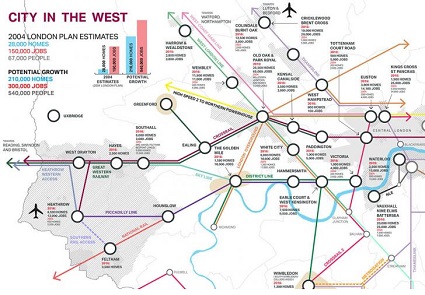
City in the West – London Plan

In the autumn of 2015, the former mayor of London Boris Johnson announced an ambitious urban development plan for the British capital. The project (which in fact consists of two different but interrelated plans known as City in the East and City in the West) aims to create a more balanced distribution of economic and commercial power within the UK’s capital city.

Over the past decade, development plans in West London have been somehow overlooked, since most of the work has been directed at transforming East London and getting this area ready for the Olympics. The City in the West Plan was created to address this situation and to help tap into the potential of West London and turn it into one of the most desirable places to live and work.

City in the West: Overview and Key Figures

City in the West is a joint initiative supported by the Greater London Authority, Transport for London, local councils in west and south west London, and various public and private sector investors. One of the key objectives of the City in the West plan is to consolidate a number of local planning and development projects, such as the Western Wedge or the Western Access Corridor. Other important objectives include the delivery of substantial infrastructure improvements, the creation of jobs, and the construction of quality and affordable housing.

This plan could be considered as an ambitious extension of the London Plan. Whereas the 2004 London Plan contemplated the creation of 150,000 jobs in West London, the new plan sets its estimates at 300,000 jobs. Housing creation estimates have also been re-evaluated, going from 30,000 homes according to the 2004 plan to approximately 210,000. All in all, the Greater London Authority expects that more than 600,000 Londoners will directly or indirectly benefit from the new developments brought about by this plan.

Locations and Scope

The City in the West plan will be implemented across several Opportunity and Intensification Areas. Housing Zones have also been designated in boroughs located to the west and south west of central London. Key locations include: Continue reading “City in the West – London Plan”