Explore Fleet Street: History, Architecture, Business and Tourism

Explore Fleet Street London LondonOfficeSpace.com @officeinlondonFleet Street – The historic heart of Britain’s newspaper industry is Fleet Street. Given its past as a centre for publishing and printing, Fleet Street has become linked to some of Britain’s most notable literary personalities. A main thoroughfare throughout its history, Fleet Street is today connected with the rest of the city with nearby Underground stations, including Temple, Chancery Lane, and Blackfriars, as well as the City Thameslink and Blackfrairs railway stations.

Continue reading “Explore Fleet Street: History, Architecture, Business and Tourism”

Guide to Oxford Street: Key Facts, History, Architecture and Tourism

Oxford Street is the home of London’s fashion scene and a world class shopping district. Shoppers and visitors to London will find some of the best and most luxurious shops and brands along Oxford Street. Over one-and-a-half miles of some 300 boutiques and shops, department stores, luxury hotels, and fine restaurants combine to create the busiest shopping street in Europe.

About Oxford Street

Oxford Street is bound by the Marble Arch in the east and Tottenham Court Road to the west. It follows the route of a former Roman road that connected Hampshire with Colchester. The River Tyburn runs underneath Oxford Road, with the Grays Antique Centre close to the junction with Bond Street featuring claiming to have an open conduit where part of the stream flows into its basement.

Since the 12th century, Oxford Street has also been known as Tyburn Road, Uxbridge Road, Worcester Road, and Oxford Road. Its current name was adopted in 1729. From the 19th century, Oxford Street became synonymous with shops and London’s retail and fashion sectors. Prior to this, the road was infamous as the final leg for condemned prisoners travelling from Newgate Prison to gallows near Marble Arch. Extensively bombed during the Second World War, Oxford Street was also the target of IRA bombers in the 1970s.

Oxford Street Highlights

Today, flagship stores for some of Britain’s biggest retail names dot Oxford Street, including Debenhams, John Lewis, and House of Fraser. The largest Marks & Spencer store in Britain is also found along Oxford Street at the junction with Orchard Street. Marks & Spencer also operates a branch at the Pantheon, the site of an ornate theatre that originally opened in 1772 and demolished in 1937. HMV also operates the largest music store in Europe at 150 Oxford Street.

Halfway along Oxford Street where the road meets Regent Street is Oxford Circus. Designed by John Nash and built in the 19th century, Oxford Circus today is where you will find a tube station, frenzied shoppers, and a sprawling pedestrian scramble or diagonal crossing, which was added in 2009.

Every year since 1978, Oxford Street has been decorated with Christmas lights during the holiday shopping season. A tradition started in 1959 and interrupted by a recession that began in 1967, the lights have been switched on by celebrities since 1981. Jim Carrey, Charlotte Church, the Spice Girls, the Sugababes, the cast of Coronation Street, and Richard Branson have been some of the famous faces that have officially launched Oxford Street’s busiest shopping period.

Oxford Street’s Impact on the Economy

The fashion industry in Britain contributes over £21 billion each year to the economy, according to the British Fashion Council. The industry also supports approximately 816,000 jobs. Oxford Street alone is home to over 200 British fashion brands. The area employs over 50,000 style experts and educates over 2,000 students in fashion. It also attracts over 100 million visitors each year, who spend £4.9 billion every year along Oxford Street.

Getting to Oxford Street

Whether by public transit, by car, or on foot, Oxford Street is well connected. Bond Street, Marble Arch, Oxford Circus, Piccadilly Circus, Tottenham Court Road, and Green Park tube stations are found either along or near Oxford Street. The shopping district is also with a short walk from ten of London’s mainline railway stations. Nearly 20 bus routes make their way through Oxford Street, connecting the area with other parts of London, including Notting Hill, Victoria and Paddington stations, Tottenham, and Trafalgar Square.

Thinking of opening a new office in the Oxford Street area? London Office Space has a number of available serviced offices on Oxford Street.

Further guides on important streets in the city of London including Baker Street, Broad Street, Goodge Street, Great Portland Street, Old Street, Cannon Street and Regents Street.

Guide to Liverpool Street: Key Facts, History, Architecture and Tourism

Although inhabited for centuries, the area around Liverpool Street began to gain importance during the Middle Ages, when it was established as an important trading centre and as a convenient stop for travellers and merchants. From the end of the nineteenth century onwards, Liverpool Street experienced rapid growth, which was mainly due to the inauguration of the railway station. Nowadays, Liverpool Street is home to a larger number of corporations, hotels, restaurants, and entertainment venues.

London's Liverpool Street @officesinlondon

Liverpool Street’s importance in the financial world

Liverpool Street is considered one of the gateways to the City of London, and it is sometimes considered a part of the capital’s financial district in its own right. There are numerous meeting rooms and conference venues in the area that cater to business people, convention delegates, and employees from nearby blue chip companies. Some important firms in the finance, business, and banking sectors located in Liverpool Street include UBS, Forex Expert, Regus Business Centres, The Japan Bank, Mizuho Corporate Bank, Natwest, Barclays Bank, Panmure Gordon Investment Banking, Shinkin International, Eden Financial, Halifax, H. S. Nordbank, and Bank of Tokyo Mitsubishi.

However, these are not the only industries with presence in Liverpool Street. Other renowned businesses that have chosen this area as their base include Marnix Europe (insurance), Marubeni (energy), Wallis Retail, Primus Build Contractors (construction), ICX Europe (telecommunications), Inpex (oil & gas), Calyx (IT), and BP. Continue reading “Guide to Liverpool Street: Key Facts, History, Architecture and Tourism”

Explore Fenchurch Street: History, Architecture, Business and Tourism

Located in the City of London, Fenchurch Street runs between Aldgate to the east and Lombard Street and Gracechurch Street in the west. With a predominately urban feel, Fenchurch Street is lined by a number of office buildings. Strongly rooted in the historical evolution of London, today the street is home to several offices, pubs and shops.


(Image © Worthing Wanderer)

History

Much of Fenchurch Street has been gradually replaced with office towers and shops. Originally built where Roman London once thrived, Fenchurch Street has constantly evolved throughout its history. At the western end of the street at the junction with Lime Street, St. Dionis Backchurch once welcomed parishioners. The medieval church was rebuilt after the Great Fire of London in 1666 and eventually demolished in 1878. St. Benet’s Church at the southwest corner of Fenchurch Street and Gracechurch has also been removed, replaced by shops and offices.

First mentioned in the City Books in 1276, Fenchurch Street was originally known as Fancherche. Its name is derived from fenny or Moorish ground. The street is linked to many historical figures and events. William Wallace, a leader of the Wars of Scottish Independence, was first imprisoned in London at the home of William de Leyre on Fenchurch Street. According to tradition, Queen Elizabeth had a meal at the King’s Head Tavern on Number 53 after she was released from the Tower of London. A metal dish used by Elizabeth remains on display at the rebuilt pub. Andrew Ramsay, the brother of Viscount Haddington, was killed on the street in 1616. In 2012, Fenchurch Street also formed part of the men’s and women’s marathon races during the London Olympic Games. Continue reading “Explore Fenchurch Street: History, Architecture, Business and Tourism”

Explore Old Street: History, Architecture, Business and Tourism

As its name suggests, Old Street has been a highly transited road for centuries. The first records date from the thirteenth century, when Old Street was part of a Roman road that linked the settlements of Silchester, near Basingstoke, and Colchester. As London evolved into an important metropolis, Old Street became one of the capital’s main thoroughfares. The western side of the street was widened towards the end of the nineteenth century in order to accommodate the increasing amount of traffic and the shops that began to appear in the area.


(Image © Jonathan Brennan)

Old Street’s Silicon Roundabout

Until very recently, the roundabout that marks the intersection of Old Street and City Road had mostly been known for being the location of the St Agnes Well shopping centre. From the beginning of the 2000s onwards, there has been a drastic change in the type of businesses that can be found in the area. In fact, the Old Street roundabout is now known as the Silicon Roundabout, in allusion to the California-based technology centre. This part of Old Street is now a first class technological hub that started with 15 companies in 2008 and has grown to be the base of more than 200 firms by 2011. This is the result of a government initiative that has invested several millions of pounds in transforming this East London area into a premier business address. Continue reading “Explore Old Street: History, Architecture, Business and Tourism”

Guide to Regent Street: Key Facts, History, Architecture and Tourism

Located in the trendy West End of London and being over a mile long, Regent Street is one of the most popular thoroughfares in the British capital. Regent Street has been an important landmark since its creation in 1825. The street was designed by architect Josh Nash, who was also the mind behind other impressive buildings like Buckingham Palace or the Royal Pavillion in Brighton.

London's Regent Street @officeinlondon

Currently, Regent Street is a protected conservation area and part of the Crown Estate, as every single building along its length is listed.

Regent Street: a premier destination for business and shopping

Although very close to the shopping mecca of Oxford Street, Regent Street is a shopping destination in its own right. It is estimated that the street is visited by more than 7.5 million people every year for purposes as diverse as business, shopping, and entertainment. There are 1.5 million square feet dedicated to retail space in Regent Street, as well as 1 million square feet of premium office space. Some prestigious tenants include international retail brands like Burberry, Apple, Hamleys, Ted Baker, Ferrari, Timberland, Levi’s, GAP, Armani, Benetton, Lacoste, Hamleys, and Godiva. Liberty of London, located a couple of minutes away from Oxford Circus station, is one of the capital’s leading department stores, and has the added interest of being housed in a charming Tudor style building. Continue reading “Guide to Regent Street: Key Facts, History, Architecture and Tourism”

Guide to Baker Street: History, Architecture, Business and Tourism

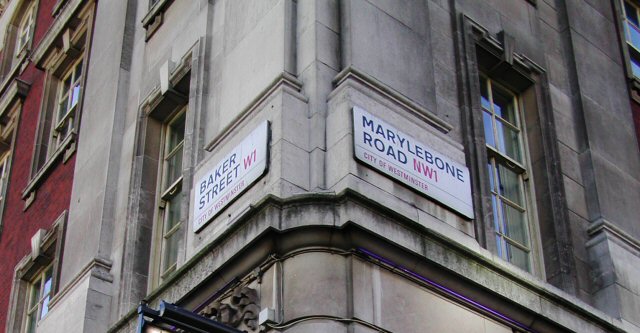
Stretching along more than 1.5 miles, Baker Street runs from Marylebone to Oxford Street, and is one of the main arteries in this area of London. Like other neighbouring streets, Baker Street was first laid out under its current name during the eighteenth century. The street received its name from the builder who laid it out.

In the beginning, Baker Street was mostly a residential area for affluent families. However, as London grew in size, population, and economic importance, the street welcomed new tenants and transformed some of its residential buildings into office space and commercial premises.

Famous buildings

Perhaps the most well known building in Baker Street is number 221B, otherwise known as Sherlock Holmes’ residence. In fact, the address does not exist, although the Sherlock Holmes Museum is located on numbers 237-241. The Abbey House, home to the Abbey National Building Society between 1932 and 2005, and located on numbers 219-229 of Baker Street, received for many years correspondence addressed to Mr Sherlock Holmes. Continue reading “Guide to Baker Street: History, Architecture, Business and Tourism”