

Return to Office: UK Workers Surveyed About RTO Mandates

A close-up view of the bottom halves of three smartly dressed colleagues walking across the white lines of a pedestrian street cross-walk to go to work in the morning. The two men on the right carry soft leather briefcases and wear long black coats, and the woman on the left has a large shoulder bag and wears a long grey coat. The woman on the left and the man on the far right of the three have lanyards with their work IDs visible hanging down from their necks, and the rear of a yellow car is visible parked on the side of the street behind the woman and to the left. Image at LondonOfficeSpace.com.

Survey Summary: UK Office Workers’ Perspectives on Returning to the Office

Five years after the onset of the pandemic that transformed the world of work, the dynamics of office life are still getting readjusted. According to a 2024 survey, more than 80% of British chief executives foresee a full return to the office within 3 years – but how do employees view this? 

To find out, we polled 400 office workers of private and public sector employers on this hot topic and asked about their preferences and concerns as they transition from remote work back to the office. Here are the key findings.

Who’s Actually Back in the Office?

Our UK survey reveals that a majority of respondents (57%) have returned to the office on a part-time or hybrid working basis at their employer’s request, while 43% are back full-time. These figures confirm that in-person office work has taken over remote work as the new normal, although there’s a substantial shift towards flexible models. 

Continue reading “Return to Office: UK Workers Surveyed About RTO Mandates”
London Office Market Report 2024

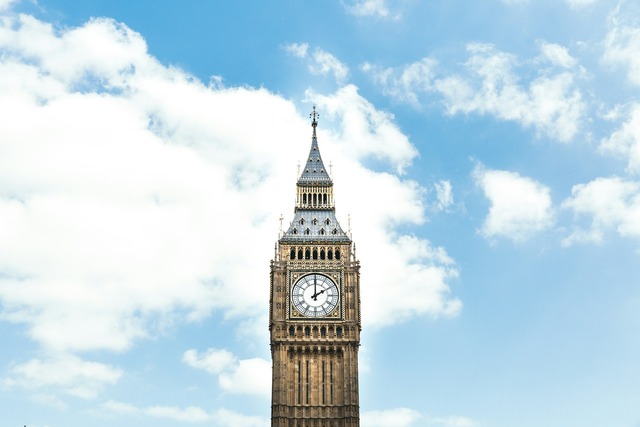
A daytime view of the top half of Big Ben clock tower in London framed by a brilliant blue and white cloud-strewn sky. Image at LondonOfficeSpace.com.

The London Office Market in 2024 – At a Glance

The central London office market continues to shift in line with previous years’ trends, such as generalised downsizing due to hybrid work arrangements, a flight to quality, and a limited development pipeline. Although the first quarter of 2024 showed evidence of a slowdown in activity, this slow start of the year isn’t concerning considering that the market ended 2023 on a five-year high.

Here are some key indicators that summarise the status of the London office market in 2024:

Total take-up levels were 2.47 million square feet in Q1, vs. 2.1 million square feet during the same period in 2023.

Vacancy rates city-wide have increased to 9.5% in Q1 2024, vs. 8.9% in 2023.

– Lastly, the amount of office space under construction also remains stable, with 15.86 million square feet in 2024 vs. 16.75 million in 2023.

Continue reading “London Office Market Report 2024”

Navigating Central London Office Market Trends

A daytime view along London’s Millennium Bridge towards St Paul’s Cathedral. People are walking on the bridge wearing dark winter clothes, and the cathedral’s dome rises in the distance above buildings on either side. Image at LondonOfficeSpace.com.

Being one of the world’s top business hubs, Central London offers a diverse array of office spaces tailored to the needs of modern businesses. Having said that, the city’s office market is constantly being shaped by various economic and demographic trends. In this article, we explore the current trends and factors shaping the office space market in Central London.

Demand for Office Space

Demand levels in the Central London office market have exceeded forecasts, reaching new record highs in early 2024 relative to the past 10 years. Data from early 2024 shows appetite for Grade A offices accounting for 70% of total transaction volume in Central London.

Occupier demand for quality space is evident in the disparity between vacancy rates for different office asset classes. For example, while in the City vacancy rates average 9.5% for all classes, new build vacancies are significantly lower at just 1.4%. Moreover and further confirming the strong demand for new offices, pre-let rates are high for new Class A office buildings, especially among financial services occupiers, as many developments are fully let by the time they’re released into the market.

Continue reading “Navigating Central London Office Market Trends”

Emerging Areas for Affordable Office Space: London

A morning aerial view across the London city skyline, with The Gherkin building in the foreground and the River Thames winding away in the background. Image at LondonOfficeSpace.com.

As one of the world’s most dynamic office markets, London’s real estate offer caters to a diverse range of occupiers, from large corporations seeking trophy office spaces to startups interested in coworking space in alternative locations that offer competitive prices. 

In this article, we focus on the up-and-coming London districts that offer affordable office space options.

Continue reading “Emerging Areas for Affordable Office Space: London”

Do Employees Feel Supported by Their Managers After the Pandemic? (2022 Poll)

Following on from our recent articles exploring the ways in which UK office workers feel about their return to the workplace after the COVID-19 pandemic, we once again polled 450 individuals to determine how employees feel about the managers and bosses orchestrating a shift back into the office.

The questions presented by this poll asked respondents to give a general indication of how supported they’ve felt by management since returning to the workplace and outline whether they currently feel positive, negative, or neutral about their employer.

To summarise

  • 29.3% of UK office workers feel more supported by management since returning to the workplace
  • On the other hand, 18.4% of respondents fell less supported
  • 44.4% of UK office workers indicated that managerial support felt the same in a post-pandemic working environment
  • The remaining 7.8% of respondents stated that they haven’t returned to the workplace

Continue reading “Do Employees Feel Supported by Their Managers After the Pandemic? (2022 Poll)”

UK Office Workers Polled: Characteristics of a Good Manager

In May 2022, we conducted a poll of 450 working Britons to determine what they look for in a good manager. The ultimate goal of this poll was to gain a picture of where workers’ priorities stand after the COVID-19 pandemic, in terms of their preferred managerial style and methods of support.

When conducting this poll, we made sure to limit our scope to UK office workers only; a group that experienced significant upheaval in their working lives as they shifted between the office and remote locations throughout the pandemic. It’s our belief that this group will be especially indicative of the ways in which evolving workplace norms can quickly impact the perceived characteristics of an effective manager.

Characteristics Presented to Respondents

In no particular order, the characteristics presented to respondents were:

  • Adherence to COVID-safety measures
  • Frequent and effective support on tasks
  • Empathetic leadership skills
  • Facilitation of flexible working schedules
  • Strong leadership style
  • Ability to build and maintain work culture

Continue reading “UK Office Workers Polled: Characteristics of a Good Manager”

How Do UK Office Workers Rate Their Return to the Office?

two cartoon figures in front of a large clipboardWe conducted a poll in May 2022 asking 450 UK office workers to express how they felt their employers had managed their return to the workplace after COVID-19 lockdowns. Limiting our pool of respondents to just UK office workers provided us with the best indication of how businesses across the country managed the extreme transition between remote and in-person working schedules, as this group was amongst the most drastically impacted by mandated isolation.

This poll found that

  • 54.5% of UK office workers found their employer’s roadmap out of lockdown to be well presented, providing clear direction
  • 27.6% of UK office workers felt they were confused by their workplace’s poorly presented roadmap out of lockdown
  • Surprisingly, 18% of respondent indicated that their employers had no plans or roadmap in place for their return to the office
  • When asked to rate their return to the office out of 5
    • 46.2% of respondents rated it 4 or higher
    • 40.7% of respondents rated it 3 or lower
    • 13.11% of respondents indicated that they hadn’t returned to the office

These results paint an interesting scenario, one in which roughly half of UK office workers are happy with their return to the office and the roadmap laid out by employers. Continue reading “How Do UK Office Workers Rate Their Return to the Office?”

55% of UK Office Workers Favour Hybrid Working, Will the Office Ever Be the Same?

woman working at a desk with flowers and laptop on itIn May 2022, we conducted a poll of 450 office workers across the UK to determine their true working preferences. This poll was designed to inform us on a number of concepts related to the post-pandemic UK working landscape, with hybrid and various other working models receiving particular attention.

The most obvious and glaring takeaway from our poll was that more than half of respondents believe hybrid to be their ideal working arrangement. Prior to conducting this poll, we ensured that respondents were limited to individuals who had worked in an office environment prior to the pandemic, a group that we believe to be the most indicative of changing sentiments around in-person, remote, and hybrid working models. We posed many questions to these respondents regarding their pre-pandemic and post-pandemic working situations, as well as the ways in which their working preferences changed since the start of 2020. Results from related questions were seen to be in line with the 55% majority that indicated their preference for hybrid working arrangements for workers returning to the office.

To summarise relevant findings, this poll illustrated that (rounded to the nearest whole number):

  • 55% of UK office workers see the hybrid model as their ideal working arrangement
  • 20% of respondents indicated a preference for full-time remote work, highlighting that a sizeable number of UK office workers have no desire to return to their former office spaces
  • On the other hand, 15% of workers polled believe that it’s ideal to return to the office full-time. A number which, despite being lower than the desire for full-time remote work, clearly illustrates support for more traditional working models
  • The clear minority (10%) of those polled preferred to return to work in a part-time capacity. Of those who desired part-time work, there was a slight preference for purely remote (56%) when compared to purely in-person (44%) schedules

Continue reading “55% of UK Office Workers Favour Hybrid Working, Will the Office Ever Be the Same?”

East London Office Space Rental Costs & Vacancy Rates 2021

East London offices are home to a diverse mix of tenants, involved in sectors ranging from industry to manufacturing, technology, banking, and finance. Office-based businesses are attracted to this area due to its competitive rental rates and access to local talent.

2021 started off in East London with average prime rents of £45 per square foot. Rates for tenant controlled space were slightly lower at £42 per square foot. Asking rents were one of the few indicators that remained stable along with incentives, which currently amount to 30 months rent-free for office leases of 10 years or more.

Although rental rates experienced little changes during Q2 2021, they’re expected to decline by 10-15% by 2022, a figure substantially higher than in other London sub-markets.

As for vacancy rates in East London, they spiked to nearly 12% during the first three months of the year. Although this number is high, it’s still lower than the record-figure of 13.8% reached in 2020.

Continue reading “East London Office Space Rental Costs & Vacancy Rates 2021”

London’s Ever-Changing Skyline And Its Implications For The Office Rental Market

London’s skyline and its blend of traditional and modern architecture is certainly representative of the city’s special relationship with its past and future. One of the most distinctive traits of the city’s skyline is its surprisingly low number of high rises, especially when compared to other global cities with a large population and high levels of economic activity. Makeover plans were put on hold or abandoned altogether during the financial crisis, and in other cases they were met with opposition from residents and consumer groups. But recently, an impressive number of development plans have received the go ahead, and in early 2017 there were 119 high rises in the city’s development pipeline. Submissions for planning permission increased by 30 per cent in just one year, and many affirm that the city’s skyline will the fully transformed by 2025.

Which Areas Are More Likely To Be Transformed?

London’s vertical transformation will be most evident in the City and East London. Tower Hamlets will be thoroughly transformed, as there are 93 high rises in the borough’s development pipeline. This area will be home to the city’s tallest skyscraper, once the 75-storey Landmark Pinnacle is completed. Moreover, the construction of the impressive Bishopsgate 22 and 1 Undershaft may make the Gherkin invisible, and similar developments are planned in Isle of Dogs (with the 45-storey Baltimore Tower), the EC3 postcode (with the Scalpel Tower, 100 Bishopsgate, and 60-70 St Mary Axe).

The city’s skyline will also bring a new visual identity to areas outside the city core. Shoreditch will consolidate itself as a major business district with developments like Bishopsgate Goodsyard, Principal Tower, and the Stage. Southwark will have 26 new high rises, and Lambeth and Newham will not be left behind with 32 each. Other areas whose skyline is likely to change include Croydon, Barnet, and even West London, particularly in Chelsea, Hammersmith and Fulham. Continue reading “London’s Ever-Changing Skyline And Its Implications For The Office Rental Market”